Philosophy

Treat the person, not the symptoms.

Two commitments underpin every talk: the osteopathic view of the patient as an integrated whole, and a scientific — not ideological — case for plant-based nutrition.

The Osteopathic Distinction

Modern healthcare treats isolated symptoms in silos.

Osteopathic medicine views the patient as an integrated unit of mind, body, and spirit, driven by an innate capacity for self-regulation and healing. Dr. Harrington applies that philosophy to identify root causes, treating lifestyle-based interventions as frontline therapy rather than as an adjunct to it.
Rooted in Science. Powered by Plants.

Bridging the gap between conventional treatments and holistic health.

By pairing modern medicine with lifestyle interventions, we unlock true whole-person care.

The Six Pillars

PEARLS: the six pillars of lifestyle medicine.

Nutrition gets the attention, but it is one of six. Each pillar is independently supported by evidence, and they compound — which is why addressing them together outperforms addressing any one alone.

  1. Plant-Based Diet

    Whole plant foods as the foundation of the plate, not a side dish to it.

  2. Exercise

    Consistent movement that fits an actual life, not an idealised one.

  3. Avoidance of Toxins

    Removing what actively works against recovery — chiefly tobacco and alcohol.

  4. Restorative Sleep

    The repair window everything else depends on, and the one most often surrendered.

  5. Loving Relationships

    Connection is not a soft factor. It shows up in hard outcomes.

  6. Stress Reduction

    Practical techniques for lowering the chronic load the body keeps score of.

The Osteopathic Frame

Four tenets, stated plainly.

These are usually recited as philosophy. Treated as a clinical checklist, they change what you ask a patient and what you reach for first.

  1. The person is a unit

    Body, mind, and spirit are not separate systems that happen to share an address. Treating one while ignoring the others is how chronic disease gets managed instead of resolved.

  2. The body is self-regulating

    Given the right conditions, the body defends and repairs itself. Much of clinical work is removing what obstructs that capacity rather than overriding it.

  3. Structure and function are reciprocal

    How the body is built shapes how it works, and how it works reshapes how it is built. Neither can be understood without the other.

  4. Rational treatment follows from these

    Therapy that ignores the first three principles may relieve a symptom, but it rarely changes the trajectory a patient is on.

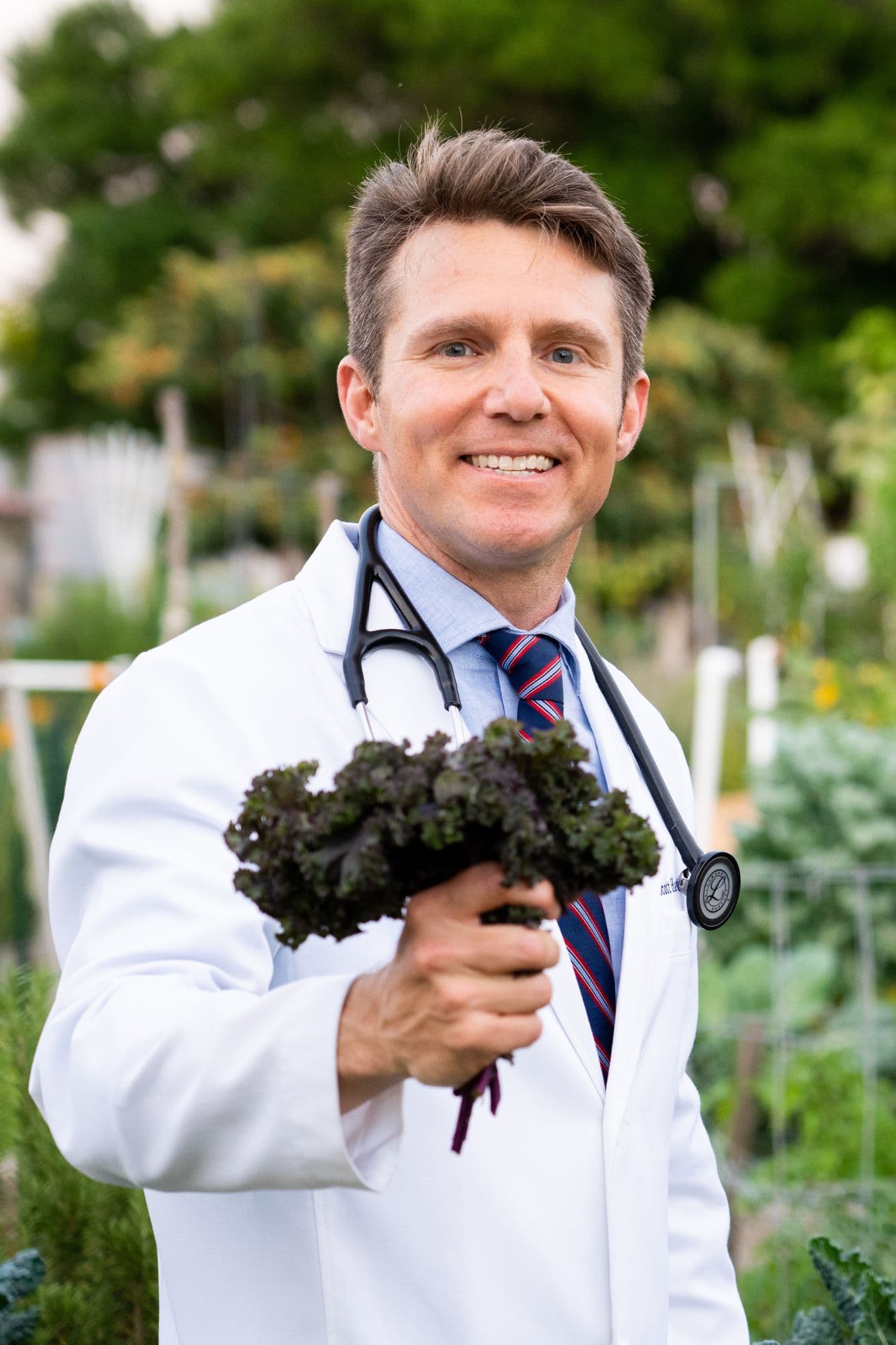
Dr. Scott Harrington holding freshly harvested kale

Evidence Over Ideology

The evidence is more hopeful than either side admits.

Plant-based nutrition suffers from advocates who overstate and skeptics who dismiss, which leaves clinicians without anything usable.

The honest position is narrower than either camp wants, and considerably more useful. The evidence for whole-food, plant-based patterns in cardiometabolic disease is strong, reproducible, and largely uncontested. The evidence for some of the wider claims made on its behalf is not.

Saying so out loud is what earns a clinical audience's attention — and what gives patients a version of the advice they can actually keep.